Description
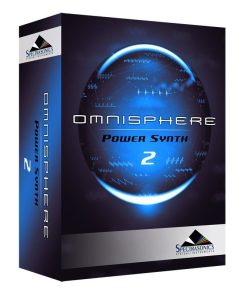
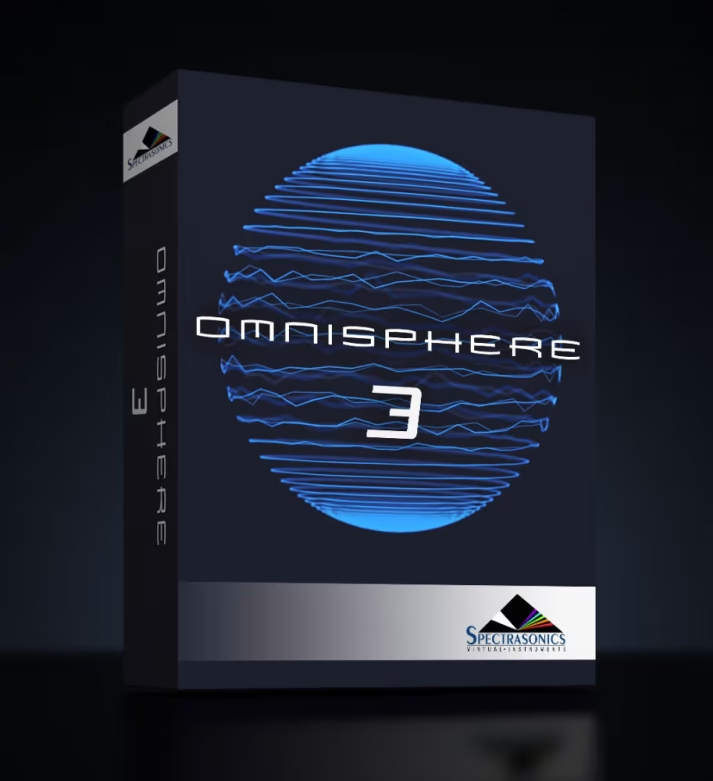
Omnisphere 3 VST — Spectrasonics built this one for the kind of producer who opens a session and doesn’t know what they need yet. Film composers use it. Club producers use it. Gospel keyboardists use it. The common thread is that nobody ever outgrows it, and after one serious session inside it, that stops being a surprise.
Version 3 is not a patch update. It brings 18 entirely new sound libraries, a rebuilt synthesis engine with features borrowed from the best hardware ever made, over 35 new studio-grade FX units, full MPE (Polyphonic Expression) support, and hardware integration profiles for more than 300 synthesizers and controllers. All of it installs in the same hard drive space as Omnisphere 2.
18 New Sound Libraries — Curated, Remastered, Optimized
The factory library has been rebuilt from scratch across 18 new collections. Some are built for the studio — dense pads, cinematic beds, scoring textures. Others are wired for the stage or the club. All of them are tagged and sorted by use case, so you land on the right sound fast rather than scrolling through thousands of unrelated presets. All classic patches from previous versions have been remastered with the latest v3 features — and thanks to Spectrasonics’ lossless optimization technology, the entire expanded library occupies the same disk space as Omnisphere 2.
Key Features of Omnisphere 3 VST
New Synthesis Engine — What’s Actually New
The synthesis engine was already deep. Version 3 goes further in specific directions that matter. Quadzone splits your sound across four simultaneous zones — each with its own timbral behavior. The new Dual Frequency Shifter can stack in series for dramatic pitch effects, or run parallel for something weirder. Circuit-modeled saturation gives you real harmonic grit, not just a drive knob. And 100+ new EDM wavetables hand you raw, sweepable material for sound design that couldn’t exist in earlier versions.
The new Glide system brings portamento curves modeled on the OBXA®, Moog®, and Odyssey® — including Auto-Bend and a CS80 Glissando mode. Unison Phase Scatter and Mix controls open up lush, wide stereo fields that feel genuinely analog. These are not checkbox features. Each one changes how the instrument behaves under your hands.
Hardware Integration — 300+ Synths and Controllers Supported
Most soft synths feel disconnected from hardware — you map MIDI manually, something breaks, you give up. Omnisphere’s Hardware Integration skips all of that. Pick your keyboard or controller from the list of 300+ included profiles and the plugin maps itself. Roland, Korg, Moog, Sequential, Arturia — they all have dedicated profiles already built in. New Adaptive MIDI Scaling ensures every fader and knob responds smoothly whether you’re in the studio or performing live.
For the complete list of supported hardware, see the official Omnisphere hardware compatibility guide.
35+ New Effects Units — Including a Bonus Standalone FX Rack
Version 3 adds over 35 new FX units, bringing the total to 93. Every one of them runs inside the modulation matrix — meaning you can automate, route, and modulate any effect parameter the same way you would a filter or oscillator. They’re available per layer, per aux bus, and across the master output.
All 93 FX units also ship as a standalone Omnisphere FX Rack plugin (AU/VST/AAX) — load it on any DAW track, independent of Omnisphere entirely. For producers chasing a specific warmth or character, that’s a serious addition that has nothing to do with opening the synth.
Sounds That Don’t Exist Anywhere Else
Nobody else is sampling blown ostrich eggs. Or tonal sand, or a nyckelharpa, or percussive snow. These aren’t stock orchestral hits dressed up with a new name — they’re note-by-note recordings of objects and instruments that exist nowhere else in the plugin world. Celestaphone, Magic Wand Metallophones, Tongue Slap Flute, Sul Tasto Cello, Piano Harmonics — each one captured at 35 individual pitches, not pitch-shifted from a single sample. Run any of them through granular processing, wavetable morphing, filter sculpting, or the modulation matrix and they respond exactly like traditional oscillators. The difference is they sound like nothing anyone has heard before.
Looking to build out your plugin collection further? Browse our full VST plugin catalog or explore all synthesizer plugins available on VSTor.
DAW Compatibility & System Requirements
Omnisphere 3 VST works in Ableton Live, Logic Pro, FL Studio, Pro Tools, Cubase, Studio One, Bitwig, and Reaper — any 64-bit host running VST3, VST2, AU, or AAX. A standalone app is included if you want to skip the DAW entirely. Mac users need macOS 13 Ventura or higher; Apple Silicon runs it natively. On Windows, 64-bit and Windows 10 or higher covers it.
Frequently Asked Questions
Is Omnisphere 3 backwards compatible with Omnisphere 1 and 2 projects?
Fully. Version 3 installs over the previous plug-in and every existing project, custom patch, and third-party library loads exactly as it did before. Nothing in your DAW session needs to change.
Can I import my own audio files into Omnisphere 3?
Yes — WAV and AIFF files up to 24-bit / 192kHz load directly as synthesis sources. From there, the full engine applies: granular, wavetable, filters, modulation, effects. A drum loop, a field recording, a guitar riff — all of it becomes raw material for building something new.
Does Omnisphere 3 VST run natively on Apple Silicon?
M1, M2, M3, M4 — all native. Intel Macs on macOS 13 Ventura or higher work too. AU, VST3, VST2, and AAX are all supported in any 64-bit host.
How does Hardware Integration work?
Pick your hardware from the built-in list — 300+ profiles cover everything from a Moog Subsequent 37 to a Novation Launchkey. Once selected, Omnisphere maps its parameters to your physical knobs and faders automatically. No MIDI learn. No digging through menus. Connect and play.
What’s new in Omnisphere 3 compared to version 2?
18 new sound libraries, 35+ new FX units, a bonus standalone FX Rack plugin, Quadzone synthesis, Circuit-Modeled Saturation, Oscillator Drift, Dual Frequency Shifter, Patch Mutations, Adaptive Global Controls, hardware integration expanded to 300+ devices, full MPE support, redesigned browser — and the library still takes the same hard drive space as v2.
Is there an upgrade price for existing Omnisphere owners?
Omnisphere 1 and 2 owners both qualify for upgrade pricing through the Spectrasonics webstore. Atmosphere owners do too, via the Legacy Upgrade path. One condition: used copies need a proper license transfer through Spectrasonics before any upgrade applies.
Which DAWs does Omnisphere 3 VST support?
Any 64-bit DAW running VST3, VST2, AU, or AAX works — Ableton Live, Logic Pro, FL Studio, Pro Tools, Cubase, Studio One, Bitwig, Reaper. A standalone app ships with it too, so no DAW is required at all if you prefer it that way.